Garage Door Specifications and the Expense of Neglecting Them
A garage door looks simple from the road. It opens up, it shuts, and many people just consider it when it quits working. That is generally the wrong moment to begin paying attention.
In technique, a garage door is one of the most important moving components of a building envelope. It is a huge opening in a structure that has to withstand wind, stay straightened, protect people and property, and run reliably after years of usage. When it is badly specified, badly preserved, or fixed without regard for garage door requirements, the consequences are rarely limited to the door itself. Damage spreads. Water gets in. Wall surfaces fracture. Ceilings raise. Roof cladding can be jeopardized. In severe weather, the failing can also transform the door right into a source of unsafe debris.
That is why standards issue. They are not paperwork for the sake of paperwork. They are the line in between a system that carries out under stress and one that paves the way at the worst feasible time.
What garage door requirements actually do
A basic collections a criteria for efficiency, style, testing, or installation. In the garage door context, the point is not visual uniformity. The point is security, durability, and predictable operation.
Standards Australia is clear that Australian Requirements are voluntary unless they are referenced by regulation. Once a standard is picked up by guideline, code, or an additional legal tool, it can end up being compulsory for the work or the area in question. That distinction issues due to the fact that many individuals listen to the word "typical" and presume it is simply best practice. Occasionally it is. Sometimes it is a lawful requirement linked to a certain structure context.
For garage doors, the repercussions of getting that incorrect are substantial. A door that looks robust in normal conditions may still be unsuitable where wind loads, deterioration, or use patterns put much heavier demands on it. A certified door is not merely a door that passes a fast aesthetic inspection. It is a door that has been selected and set up with the environment in mind.
That is particularly real partly of Queensland, where wind exposure alters the discussion entirely.
Australian compliance for garage doors in cyclone-prone areas
Queensland's building structure rests within the National Building Code, the Queensland Advancement Code, the Building Act 1975, and the Structure Guideline 2021. In cyclone-prone areas, garage doors are not simply an additional household fitting. They are part of the building's wind resistance strategy.
Queensland Government advice claims garage doors mounted in affected locations since 2012 need to meet the wind-rated standard AS/NZS 4505. Older doors may not have sufficient toughness for whirlwind winds. That is a crucial point due to the fact that an older door can look flawlessly serviceable on a tranquil day and still be a weak link when the weather turns.
The failing setting is not refined. As soon as a garage door gives way under wind stress, the opening can permit pressurisation inside the home or building. That can drive damage well beyond the garage itself. The Queensland guidance is explicit that garage-door failing can trigger major damages to walls, ceilings, roof covering cladding, and materials. It can likewise create unsafe wind-borne debris. Any individual who has actually seen a garage door clasp, twist, or disintegrate in high winds comprehends just how promptly a consisted of problem comes to be a building-wide one.
The timing matters as well. Queensland building support keeps in mind that the AS/NZS 4505 requirement was taken on under the NCC for Wind Area C after Cyclones Larry and Yasi. That history tells you something crucial about just how standards are made. They are not abstract exercises. They are typically written in reaction to real damages, real failures, and real lessons discovered the difficult way.
Why older doors are worthy of special suspicion
Older garage doors are not automatically harmful, however they must never be presumed certified by default. People often acquire doors the same way they inherit old practices, without any record of when the door was mounted or whether it was picked for the real wind region. If the installation pre-dates the 2012 support in affected areas, it deserves closer attention.
In the area, the problem is generally not a remarkable collapse on the first day. It is a steady mismatch in between the door, the opening, the opener, the atmosphere, and the expectations put on it. A door might still roll, swing, or slide without problem, yet its framework might not be residential garage door repairs near me what it needs to be for the problems currently expected of it.
That space can come to be pricey extremely swiftly. Substitute after a failing often sets you back more than prepared replacement, due to the fact that emergency callouts, short-term make-safe work, climate direct exposure, and damages to inner surfaces get contributed to the costs. A door that falls short in a storm might additionally leave second repair work that tower over the cost of the door itself. This is where ignoring garage door requirements ends up being a false economic situation. The conserved bucks are commonly only obtained from a larger fixing later.
The real cost of "it still functions"
A garage door can still move and still be incorrect for the job.
That is the expression I have actually seen play out usually in repair job. Individuals evaluate the door by whether it opens up. Standards court it by whether it can proceed doing its job under expected problems. Those are not the exact same test.
The monetary cost of ignoring standards usually appears in layers. First comes the fixing costs, probably for springs, cable televisions, rollers, hinges, opener issues, or placement troubles. Then comes the ripple effect, which is where the actual cash goes. If wind or effect damage complies with, the work might move from a simple mechanical fixing into architectural rectification. If water goes into the garage after the door mobile garage door repairs near me falls short, materials and internal surface areas might require garage door resource attention. If the opener or controls were currently under strain, there may be an additional electric or gain access to problem to arrange out.
There is also the problem of service warranty coverage. Manufacturer guidance matters below. B&D says its domestic garage doors and openers gotten with each other can bring a 10-year Complete Self-confidence Service Warranty, yet just if serviced within the initial year and after that at least every two years. Gliderol likewise notes that failing to comply with authorised maintenance intervals might impact warranty protection, particularly for motorised components.
That is a useful tip that "ownership" includes upkeep responsibilities. If you skip those commitments, you may discover far too late that a guarantee will certainly not help with the fixing you now need.
Maintenance is not cosmetic, it is structural
Garage door maintenance is often treated like a sound issue. A door squeaks, so somebody oils it. A remote obtains flaky, so the battery is replaced. That becomes part of it, but it is the tiniest part.
Regular maintenance has to do with keeping the entire system within risk-free operating limitations. Gliderol claims routine expert servicing helps safety and life-span, and its maintenance guidance states panel doors need to be oiled every 3 to 6 months and serviced every 2 years, more frequently for seaside buildings. That suggestions is reasonable since seaside conditions are unforgiving. Salt, moisture, and consistent air motion speed up wear in a manner that a sheltered suburban driveway never will.
B&& D additionally encourages that some usual problems can begin with something basic, like reduced remote batteries or the opener being separated from the door. Those work fixing checks, yet they do not alter the need for experienced specialist maintenance. Once the problem moves beyond an easy battery or a lost link, the secure feedback is to stop guessing.
This is where commercial garage door repair work are entitled to certain caution. Industrial doors are not simply larger variations of residential doors. They are frequently made use of more regularly, support higher operational needs, and may belong to a bigger gain access to and security system. When repair services are delayed or improvised, the effects can impact company connection along with safety. A door that jams at a storage facility entrance can close down a delivery timetable, compromise security, and develop a manual handling threat if staff try to require the issue.
Even in residential job, the springtimes and wires are entitled to respect. They keep power. When they fall short, they can stop working strongly. That is not a component to experiment on.
Repair or substitute: a useful judgment call
People commonly ask whether a door must be fixed or changed. The straightforward answer is that it depends on the problem of the door, the age of the system, and whether the existing door fulfills the relevant standard for the site.
If the issue is small and the door is otherwise ideal for the environment, repair may be sensible. A used element, an opener issue, or a service-related fault can commonly be resolved without changing the whole door. Yet if the door is older, deterioration has held, the structure has actually been harmed, or the door does not line up with the needed wind ranking, substitute begins to make even more sense.
This judgment is especially essential in cyclone-prone locations. A non-compliant door that is patched repeatedly can come to be a recurring expenditure without ever becoming a risk-free remedy. At that point, substitute is not an upgrade for comfort, it is an improvement of an underlying mismatch.
It additionally aids to think beyond the door panel itself. The opener, the tracks, the fixings, and the surrounding structure all matter. A new door coupled with weary equipment can still underperform. Similarly, a durable door set up terribly will not deliver the outcome you spent for. Specifications are about the system, not simply the noticeable surface.
What good compliance resembles in practice
Compliance is easiest to understand when you see it as a chain of small, disciplined decisions. The door is chosen for the website, not just for look. It is set up appropriately. The opener is compatible. The door is serviced on time. Any repair services are done by people who recognize the system, rather than whoever happens to be available.
In the Queensland context, that commonly indicates inspecting whether the garage door is ideal for the wind region and whether it mirrors the demands that relate to the residential property. It likewise implies being sensible regarding age. A door mounted before the 2012 criteria in affected areas might need testimonial, even if it has actually survived many seasons without incident.
Some owners bask in the fact that a garage door has "always been great." That is not evidence of conformity. It is just proof that the conditions have not yet subjected the weakness.
I have actually seen homes where everything looked organized till a severe weather condition event put pressure on the weakest part of the opening. When that happens, the discussion modifications right away. The proprietor is no longer asking whether a door must have been serviced. They are asking why the failing was foreseeable in knowledge and expensive in practice.
The surprise worth of service records
One of one of the most ignored parts of garage door possession is record-keeping. Service days, repair work notes, and component substitutes matter greater than many people realise. They help develop whether maintenance has been kept up, which can matter for service warranty coverage and for diagnosing repeating faults.
B&& D's guarantee problem is a good example of why this matters. If the initial solution is missed out on or the two-year cycle is disregarded, the protection may not be there when needed. Gliderol's guidance points parallel, with authorised servicing intervals linked to recurring protection for certain components.
For proprietors and managers, that indicates the paperwork is not an administrative hassle. It is part of risk control. It informs the next specialist what has actually currently been done, what has been changed, and whether a mistake is most likely to be repeating or isolated.
This becomes a lot more crucial in commercial and industrial settings, where numerous people may report concerns in different means. A door that sounds different, closes erratically, or journeys a control action may be signifying the beginning of a larger problem. Without documents, the indication are easy to dismiss.
The quiet benefit of doing it properly
The ideal garage doors are the ones that do not accentuate themselves. They open up when they should, remain closed when they should, and keep doing that with periods of warmth, wind, moisture, and everyday use. That dependability is not accidental. It comes from conformity, proper spec, and maintenance that values the setting the door lives in.
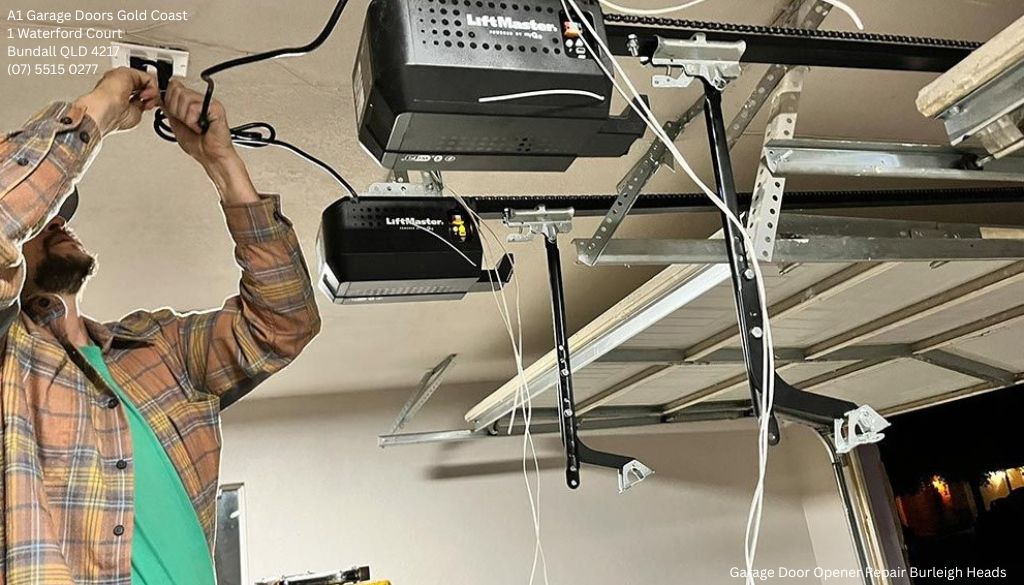
For seaside proprietors, that may indicate paying closer interest to rust and servicing frequency. For cyclone-prone areas, it suggests treating AS/NZS 4505 and the pertinent Queensland compliance framework as part of the develop, not an optional additional. For industrial facilities, it implies taking commercial garage door fixings seriously sufficient to prevent downtime and avoidable hazards.
There is a cost to doing it properly. There is likewise a much bigger expense to claiming the door is just a door.
When garage door standards are neglected, the bill can show up as architectural damage, destroyed components, endangered protection, service warranty conflicts, or an emergency fixing that lands at the worst possible time. When they are complied with, the door becomes what it should have been all along, a controlled opening in a structure, not a vulnerability awaiting climate, wear, or haste to reveal it.